2026 Road Trip Insurance: Best US Coverage Options

Securing comprehensive road trip insurance in 2026 is essential for protecting against unforeseen events during your US adventure, ensuring peace of mind and financial security.
Embarking on a grand American road trip is an exhilarating prospect, but unexpected bumps in the road can quickly turn an adventure into a nightmare. That’s why comparing 2026 road trip insurance options is not just a recommendation, it’s a necessity for any savvy traveler planning a US adventure. Understanding the nuances of different policies can be the difference between a minor inconvenience and a significant financial burden.
Understanding the Landscape of 2026 Road Trip Insurance
The world of travel insurance is constantly evolving, and 2026 is no exception. New technologies, changing travel patterns, and updated regulations mean that what was standard coverage a few years ago might not be sufficient today. For road trippers, this means a deeper dive into policy specifics is required to ensure comprehensive protection for their vehicles, health, and travel plans.
Road trip insurance isn’t a one-size-fits-all product. It encompasses a range of coverages, from standard auto insurance enhancements to specialized travel policies designed for multi-day journeys. Identifying your specific needs is the first step in navigating this complex landscape. Are you renting a vehicle, or using your own? Will you be traveling through remote areas, or sticking to major highways?
Key Considerations for Road Trip Insurance
Before even looking at providers, it’s crucial to assess what you truly need. This self-assessment will help filter out irrelevant policies and focus on those that offer genuine value for your specific trip. Think about the duration of your trip, the number of travelers, and the activities you plan to undertake.
- Trip Duration: Longer trips often require more extensive coverage.
- Vehicle Type: RVs, motorcycles, and rental cars have different insurance requirements.
- Travelers: Policies can vary for solo travelers, couples, or families.
- Activities: Adventure sports or off-road driving may necessitate additional riders.
The goal is to find a balance between adequate protection and cost-effectiveness. Over-insuring can be a waste of money, while under-insuring leaves you vulnerable to significant risks. A thorough understanding of policy terms and conditions is paramount to making an informed decision.
Evaluating Core Coverage: Medical, Vehicle, and Trip Protection
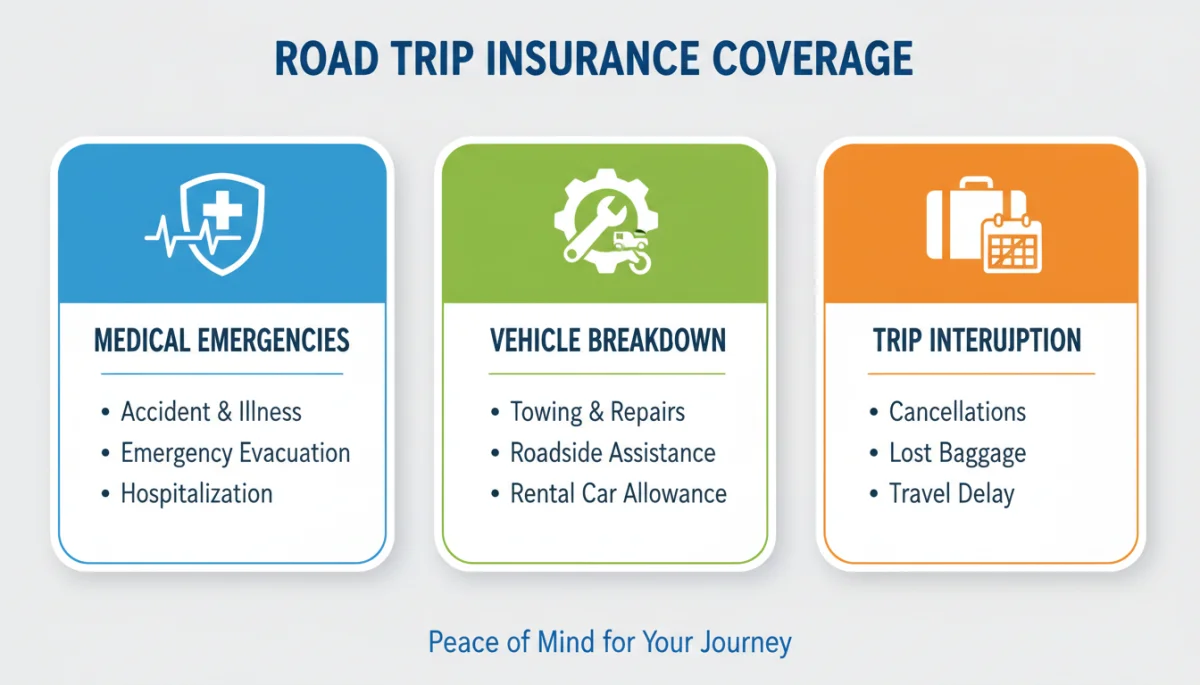
When comparing 2026 road trip insurance options, the core areas of coverage typically fall into three main categories: medical emergencies, vehicle protection, and trip interruption/cancellation. Each plays a vital role in safeguarding your adventure from various unforeseen circumstances.
Medical coverage is often overlooked by domestic travelers who assume their primary health insurance will suffice. However, your regular health insurance may have limitations regarding out-of-network care, emergency transport, or deductibles when you’re far from home. A dedicated travel medical policy can fill these gaps, providing peace of mind in a medical crisis.
Vehicle Protection: Beyond Standard Auto Insurance
While your existing auto insurance policy covers your vehicle, a road trip often introduces new risks. This might include breakdowns in remote areas, accidents involving rental cars, or damage to personal belongings stored in the vehicle. Specialized road trip policies can offer enhanced roadside assistance, rental car damage waivers, and coverage for personal effects.
- Roadside Assistance: Towing, battery jump-starts, flat tire service.
- Rental Car Coverage: Collision damage waiver (CDW) and loss damage waiver (LDW) for rented vehicles.
- Personal Property: Coverage for luggage and belongings stolen or damaged in transit.
Trip protection, on the other hand, safeguards your financial investment in the trip itself. This includes non-refundable bookings for accommodations, tours, or activities that might be lost due to unexpected events like illness, natural disasters, or unforeseen delays. Understanding the conditions under which these benefits are paid out is critical.
Top Insurance Providers and Their 2026 Offerings
The market for road trip insurance in 2026 is competitive, with several reputable providers offering a range of policies tailored to different traveler needs. It’s essential to look beyond the big names and explore options that specialize in the unique demands of road travel. Each provider has its strengths, whether it’s comprehensive medical coverage, robust vehicle protection, or flexible trip cancellation benefits.
Some providers excel in offering customizable plans, allowing travelers to pick and choose the specific coverages they need, avoiding unnecessary expenses. Others might offer bundled packages that provide a good baseline of protection for a standard road trip. Researching customer reviews and financial ratings can also provide valuable insights into a company’s reliability and service quality.
Leading Providers for US Road Trips
Several companies consistently rank high for their road trip insurance offerings. These often include a mix of traditional travel insurers and auto insurance companies that have expanded their services. Always verify that the policy is specifically designed for domestic travel within the US.
- Travel Guard: Known for comprehensive travel medical and trip cancellation.
- Allianz Travel Insurance: Offers robust plans with good emergency assistance.
- AAA: Excellent roadside assistance and travel-related discounts, often with insurance add-ons.
- Progressive/Geico (Auto Insurance): May offer enhanced roadside assistance or rental car coverage as riders on existing auto policies.
When evaluating providers, pay close attention to their claims process. A seamless and efficient claims procedure can significantly reduce stress if an incident occurs. Look for companies with 24/7 customer support and a strong track record of timely claim resolutions.
Customizing Your Policy: Add-ons and Exclusions to Watch For
A generic insurance policy might not cover all the specific risks associated with your unique road trip plans. This is where understanding add-ons, riders, and policy exclusions becomes vital. Customizing your policy ensures you’re protected against your most likely and most impactful risks, without paying for coverage you don’t need.
Common add-ons include adventure sports coverage, which is crucial if your road trip involves activities like white-water rafting, rock climbing, or even extensive hiking in remote areas. Pet coverage is another popular option for those traveling with furry companions, offering protection for veterinary emergencies or pet-related travel disruptions.
Understanding Policy Exclusions
Equally important are the exclusions. These are specific events or circumstances that your policy will *not* cover. Common exclusions might include pre-existing medical conditions (unless waived), acts of war, or participation in certain high-risk activities not explicitly covered by an add-on. Always read the fine print to avoid unpleasant surprises.
- Pre-existing Conditions: Often excluded unless a waiver is purchased.
- High-Risk Activities: Bungee jumping, skydiving, competitive racing usually require special riders.
- Negligence: Damage due to reckless behavior or driving under the influence.
- Mechanical Failures: Some policies exclude coverage for breakdowns due to poor vehicle maintenance.
Consider ‘cancel for any reason’ (CFAR) coverage if your trip involves a significant financial investment and you desire maximum flexibility. While typically more expensive, CFAR allows you to cancel your trip for reasons not usually covered by standard policies, offering a higher degree of control over your travel plans.
Making an Informed Decision: Comparing Quotes and Reading Reviews
Once you have a clear understanding of your needs and the types of coverage available, the next step is to gather quotes from multiple providers. Simply choosing the cheapest option can be a costly mistake in the long run. A comprehensive comparison involves looking at the premium, the deductible, the coverage limits, and the specific terms and conditions of each policy.
Online comparison tools can be helpful, but they don’t always capture the full picture. It’s often beneficial to speak directly with an insurance agent who can explain complex terms and help you tailor a policy to your exact specifications. Don’t hesitate to ask questions about scenarios that concern you most.
The Value of Customer Reviews and Financial Ratings
Beyond the numbers, the experience of other travelers can offer invaluable insights. Customer reviews on independent platforms can highlight a company’s strengths and weaknesses, particularly regarding their claims process and customer service. Look for patterns in feedback, both positive and negative.
- Prompt Claims Processing: A key indicator of a reliable insurer.
- Responsive Customer Service: Essential for emergency situations on the road.
- Clarity of Policy Language: Avoids confusion during stressful times.
Financial strength ratings from agencies like A.M. Best or Standard & Poor’s provide an objective assessment of an insurance company’s ability to meet its financial obligations. A high rating indicates a stable and reliable insurer, which is crucial for peace of mind when purchasing a long-term policy for a significant trip.
Future-Proofing Your Road Trip: Technology and Emerging Trends
The landscape of road travel and insurance is continually evolving, with technology playing an increasingly significant role. In 2026, we can expect to see further integration of smart vehicle technology, telematics, and AI-driven risk assessment influencing how road trip insurance policies are designed and priced. Staying abreast of these trends can help you secure the most relevant and cost-effective coverage.
Telematics, for instance, involves devices that monitor driving behavior, potentially leading to personalized premiums based on how safely you drive. While this might raise privacy concerns for some, it could offer significant savings for cautious drivers. Similarly, AI can analyze vast amounts of data to predict accident hotspots or weather-related risks, allowing insurers to offer more targeted advice and coverage options.
Embracing Digital Tools for Insurance Management
Many insurers are also developing sophisticated mobile apps that allow travelers to manage their policies, file claims, and access emergency assistance directly from their smartphones. These digital tools enhance convenience and can be invaluable when you’re on the road and unexpected events occur.
- Mobile Claim Filing: Submit documentation and track claim status from anywhere.
- Digital Policy Access: Have your insurance details readily available offline.
- Emergency Contact Features: One-tap access to roadside assistance or medical help.
As autonomous vehicle technology advances, its impact on insurance will also become more pronounced. While fully autonomous vehicles may still be some years away from widespread adoption, semi-autonomous features in 2026 vehicles could influence liability and, consequently, insurance policy structures. Understanding these technological shifts will be key to future-proofing your road trip insurance choices.
| Key Aspect | Brief Description |
|---|---|
| Medical Coverage | Supplements primary health insurance for emergencies away from home, covering deductibles and out-of-network care. |
| Vehicle Protection | Covers breakdowns, rental car damage, and personal property within the vehicle, extending beyond standard auto policies. |
| Trip Interruption | Reimburses non-refundable expenses for unforeseen cancellations or delays due to covered events. |
| Policy Customization | Ability to add riders for specific activities or needs, like adventure sports or ‘cancel for any reason’ benefits. |
Frequently Asked Questions About 2026 Road Trip Insurance
While your auto insurance covers your vehicle, it often lacks comprehensive benefits for medical emergencies away from home, trip interruption, or specialized roadside assistance for long distances. Dedicated road trip insurance fills these gaps, offering broader protection for your entire journey and well-being.
CFAR is an optional upgrade that allows you to cancel your road trip for any reason not typically covered by standard policies and receive a percentage of your non-refundable expenses back. It offers maximum flexibility but comes at a higher premium, ideal for significant financial investments.
Choosing the best provider involves assessing your specific needs, comparing quotes from multiple companies, and carefully reading policy details and customer reviews. Prioritize providers known for excellent customer service, efficient claims processing, and a strong financial rating to ensure reliability.
Many road trip insurance policies offer specific coverage for rental cars, often including collision damage waiver (CDW) and loss damage waiver (LDW). This can be a cost-effective alternative to purchasing expensive insurance directly from the rental company, but always verify the exact terms and limits.
Generally, pre-existing medical conditions are excluded unless a specific waiver or add-on is purchased. It’s crucial to disclose any pre-existing conditions during the application process and ensure you understand the terms of coverage to avoid claim denials during your road trip.
Conclusion
Ultimately, a successful 2026 road trip across the US isn’t just about meticulous planning of routes and attractions; it’s equally about fortifying your journey against the unforeseen. By diligently comparing road trip insurance options, understanding the nuances of medical, vehicle, and trip protection, and customizing your policy to your unique needs, you empower yourself with the confidence to truly enjoy the open road. The peace of mind that comes with knowing you’re well-covered allows you to immerse yourself fully in the adventure, turning potential worries into mere footnotes in an otherwise unforgettable travelogue.